
Stop Catastrophizing: How to Retrain Your Brain to Stress and Worry Less:stressless3
Stop Catastrophizing: How to Retrain Your Brain to Stress and Worry Less
https://ift.tt/mPIZC7r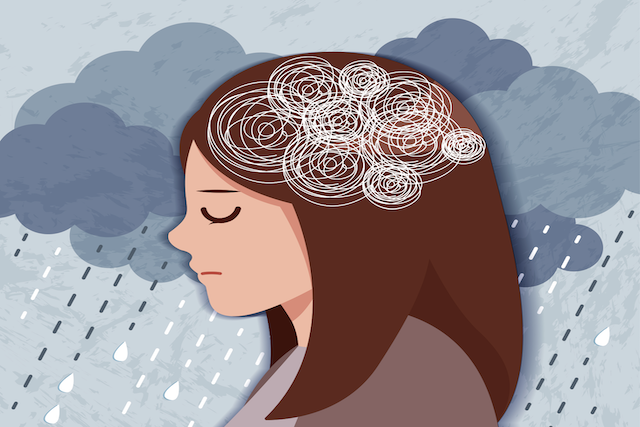
A couple years ago, I entered a depressive state as I sat through many long, eventless days while on partial disability due to a bilateral hand injury. I was working one to two hours a day max in my job, per doctor’s orders. The medical experts couldn’t say if or when I would feel better.
As I sat in pain on my sofa, day after day, running out of new TV series to occupy my time, I couldn’t help but catastrophize my future
What’ll happen if I can’t use the computer again? My whole career is based on computer work.
Will I ever be able to cook, clean, and drive like normal without pain?
Do I have to give up my pole dancing hobby—a form of self-expression that I love so dearly?
Shortly before my injury, I was preparing to change careers, and I was particularly excited about it. But worker’s compensation required me to stay put in my current job because I relied upon them to cover my medical expenses. I felt stuck and I didn’t know how to get out.
If you’re familiar with the slippery slope of catastrophizing, then you’re no stranger to how quickly you can get swept up in a thought that takes you down a dark tunnel. When you fixate on a problem and the worst possible outcome, it can feel viscerally real in your mind and body.
There’s no mystery as to why any of us catastrophize. Perhaps you do it more than other people, but the truth is that our brains and nervous systems are evolved to keep us safe through protective measures, such as assuming the worst in order to prepare for it or to avoid taking risks altogether.
If your brain judges a certain situation as potentially dangerous to your physical or social survival, it will not hesitate to activate the stress response in your amygdala, pumping the stress hormone cortisol throughout your body.
Everyone’s brain also has a negativity bias, so it likes to err on the side of caution—in other words, you often experience more anxiety over a problem than is necessary or even helpful.
When I was on disability, my nervous system downregulated my body into a depressive state, where I assumed nothing good was possible and I didn’t have to feel disappointed if the worst came true—which it never did.
When you’re immersed in an anxiety episode, you have less access to the conscious, wise part of your brain that can solve problems. The biochemicals produced in your body generate more similar thoughts and feelings, which makes it easy to spiral into an even worse state of anxiety or depression. Your stories about yourself and the world become increasingly negative. It’s like the stress response is hijacking your brain and nervous system.
Understanding how your brain functions when you’re engulfed in a catastrophizing episode is important for a couple of reasons.
First of all, your body is doing what it knows to do best—mobilizing you to stay safe. The stress hormone helped us escape wild animals in our evolutionary past, but we’re not facing life-or-death situations anymore. The problem is that our brains haven’t updated to modern times.
Once you know that your body is just trying to spin a doom’s day story to protect you, then you can drop any beliefs you have about yourself—like “There must be something wrong with me for picturing such horrible possibilities!” Because there is nothing wrong with you.
Secondly, the key to returning to reality and stopping the habit lies in your ability to reverse the stress response and regain control of your thinking brain, where you have clarity. Regulating your emotions and nervous system will biochemically allow you to change your stories and beliefs about yourself and the future. When you’re regulated, the narrative shifts into hope, possibility, and inspiration.
How to Change Your Stories
There is no shortage of somatic and mindfulness practices that regulate the nervous system, allowing you to reduce stress hormones and climb out of the non-existent future catastrophe.
The first step is deciding you want to change.
You have control over how you want to feel and what you want to do differently. If you’re ready to let go of catastrophizing your future, then the next step is to start noticing when you’re going down that old habit road. Catch yourself in the moment and try the following techniques to shift out of the problematic state so you can put an end to those unhelpful thoughts.
Shift into Peripheral Vision
If your inner dialogue is running rampant and you know it’s not serving you, peripheral vision is a great way to silence those thoughts immediately. Find a focal point in your room or the space around you. Without moving your eyes, soften your gaze like you’re diffusing your focus. Expand your awareness to all the space around that focal point. Continue to slowly expand out, as if you can almost see behind yourself. Try this for about twenty seconds. Shift back into focus and repeat at least once more.
Palpating + Self-Touch
Bring your palms together and start rubbing them one against another, creating some warmth and friction. Bring your full attention to your hands, noticing what you’re feeling in between your fingers and palms. Play with speed and pressure. Notice the temperature of your own hands. Maybe you even want to stretch the fingers back and forth.
Do this for about thirty seconds, and then bring both hands to opposite shoulders, like you’re giving yourself a hug. Let both hands trace down your arms to the elbows in a sweeping motion. Then bring them back to the shoulders, and back down again. Repeat for as long as feels good.
Build a Case for Possibilities
As you build a practice of resourcing your body, get curious about what you’re moving through and moving toward. As you find moments of hope and possibility, write down what you’re excited about, looking forward to, and ready to change. Provide the written evidence to yourself that you know how to feel differently about your future. Remember this feeling, because you have control over finding your way back to it.
Remember That Things Can Always Turn Around
Recognize that your brain thinks anxiety will help you prepare for the worst, but that too much anxiety limits you. And remember that it’s possible things will turn out far better than you imagine.
Challenge your own thoughts, and teach your mind how to imagine best-case scenarios instead of tragedies. What’s everything that could go right? This isn’t about hinging your happiness upon a narrowly defined marker of success, because no one knows how the future will unfold. Rather, consider that the future might pleasantly surprise you, so you can have a frame of mind that’ll make it easier to keep moving forward, pivot when needed, and develop resilience for the uncertainty of life.
Your Brain is Paying Attention
The incredible truth about interventional self-regulatory practices is that your brain is paying attention. In other words, it’s noticing that you’re cutting short an old habit and taking a turn down a new path. With repetition, this rewires the brain.
Your brain is always learning, always picking up how you’re feeling and responding to the same old triggers and stressors. Thanks to neuroplasticity, your brain and nervous system are changing. Be tenacious about stopping the self-limiting patterns, and your body will have no other choice than to update.

About Krissy Loveman
Krissy Loveman is a certified Integrative Change Life Coach with a mind and body trauma-informed approach. She helps people change the habituated beliefs and behaviors that mask their true Self. Get life-changing insight delivered right to your inbox by joining her mailing list.
Get in the conversation! Click here to leave a comment on the site.
The post Stop Catastrophizing: How to Retrain Your Brain to Stress and Worry Less appeared first on Tiny Buddha.
Related links
I want to know the mind and emotions of a man towa. I want to understand what he is thinking and feeling at any given time. I want to know what makes him happy and what makes him sad. I want to know what he fears and what motivates him. I want to know his hopes and dreams. I want to know everything about him.
Addiction Is Messy, But These Things Help Me Stay Clean
5 Ways to Use Movement (Not Exercise) to Support Your Mental Health
My Second Mother: When Someone Steps Up Like Family Never Did
just sitting silently
How to Release the Fear That Holds You Back and Keeps You Small
What Happiness Means and How I’m Boosting My Day-to-Day Joy
why am i always in one-sided relationships
Psychological behaviour of husband with his wife who failed in love before marriage
What makes you dislike yourself?
When You’re Ready for Change: You Need to Believe in Your Future Self
4 Anxiety-Calming Techniques I Wish I Used When I Freaked Out on a Plane
What type of doctors experience the most stress?
Why is it significant to overcome stress?
How I Stopped Chasing Men Who Hurt Me and Found Healthy Love : #stressless
Stay Comfortable
I have irrational thoughts that she’s better than me
Skills That You Can Learn From (A2) Trying Harder Isn\\\'t Always The Answer:stressLess-life.
How do we know what we want in our lives?
5 Simple Yet Essential Self Care Tips That Can Change Your Life
#2 . How do I stop putting my worth based on how men see me? : stressLess-life
Self love challenge - looking for a group to join!
People-Pleasers Are Liars: 3 Things We Gain When We’re Honest Instead
How to Deal With Low Moods: A 4-Step Plan to Help You Feel Better
One words to define love story Hater
does depression affect sperm quality
What is the difference between stress and emotions? The WHO has defined them as two different life skills and I am not able to make a difference.
What are some signs that show a lack of confidence in a person's speech or behavior?
Is it good to live hubby without love or marry to BF?
growing up as the only black member of a white family movie
separation anxiety mother symptoms
why self-love and self-care is important
I am very sad every day. I have decided not to live. What should I do?
why am i losing interest in things i used to love
never waste your feelings on someone who doesn't value your emotions meaning in hindi
I am very sad every day. I have decided not to live. What should I do?
Why is it significant to overcome stress?
Can-I-reduce-my-stress?
https://stressless-2021.blogspot.com/2022/06/reduce-my-stress.html
Getting Out Of A Slump
Me Exercising/dancing to Unbelievable by EMF. Not too great, but started doing this at 57 yrs......truly my inner child is coming out to play!:stressLess-life
Abandonment Issues
Increasing and practicing self worth and self love:stressLess-life
(A2) LIFE AND LOVE???:stressLess-life
Neon Genesis Evangelion and validating ones own existence:stressLess-life
Calmed myself down with loving energy.:stressLess-life
"Why do you forgive everyone but yourself?”:stressLess-life
How to accept belly fat?:stressLess-life
admiring myself all 2022 ??:stressLess-life
Self love feels so lonely:stressLess-life
Increasing and practicing self worth and self love:stressLess-life
(A2) LIFE AND LOVE???:stressLess-life
Neon Genesis Evangelion and validating ones own existence:stressLess-life
Calmed myself down with loving energy.:stressLess-life
"Why do you forgive everyone but yourself?”:stressLess-life
How to accept belly fat?:stressLess-life
admiring myself all 2022 ??:stressLess-life
Self love feels so lonely:stressLess-life
😄 " Forget the past; look forward to the future, for the best things are yet to come. ..... "
Post a Comment